London Expertise Now in Hurghada إزالة الوشم بالليزر في الغردقة
Premium Laser & Non-Laser Tattoo Removal
Bringing over 15 years of world-renowned UK clinic experience to the Red Coast. Safely clearing unwanted ink with minimal scarring and ultimate skin protection.عيادة تجميل
If you are contemplating the removal of an unwanted tattoo, experience matters more than the machine. Founded by world-renowned skin expert Lorena Oberg, we provide European-standard safety protocols right here in Egypt.
We understand that a tattoo might no longer match who you are today—whether your style has changed, you have outgrown it, or you are looking for a complete redesign. We offer both advanced Laser Tattoo Removal and specialized Non-Laser (Saline & Glycolic) Removal methods to cover the entire spectrum of ink types.
🔒 Safety & Skin Protection in the Red Sea Sun
We are not the clinic for you if your only goal is to rip ink out of your skin as fast as possible. High-speed, aggressive treatments cause severe scarring—especially on sun-exposed or naturally darker skin tones. We specialise in gentle, calculated tattoo removal designed to protect your skin’s integrity, delivering beautiful results for all skin types (including dark Asian, Mediterranean, and African skin layers).
Understanding the Tattoo Removal Process
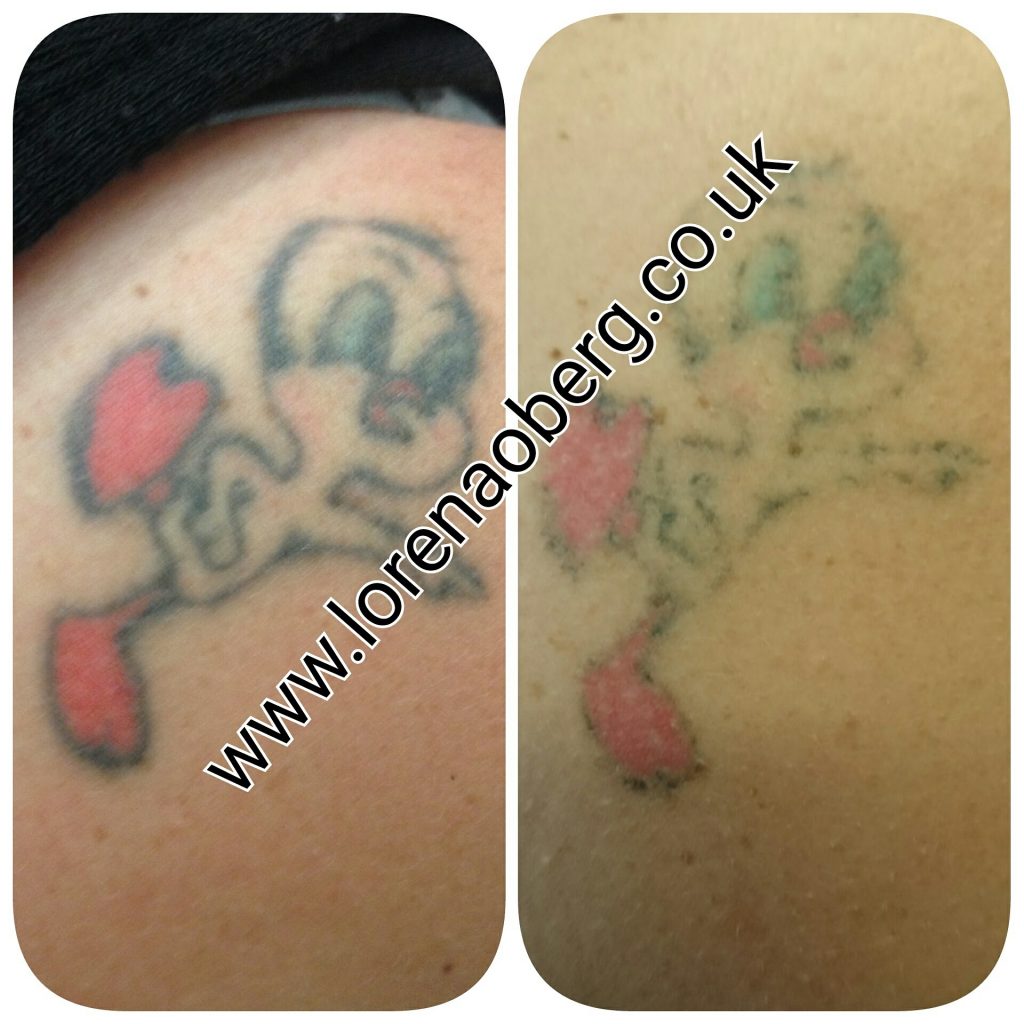
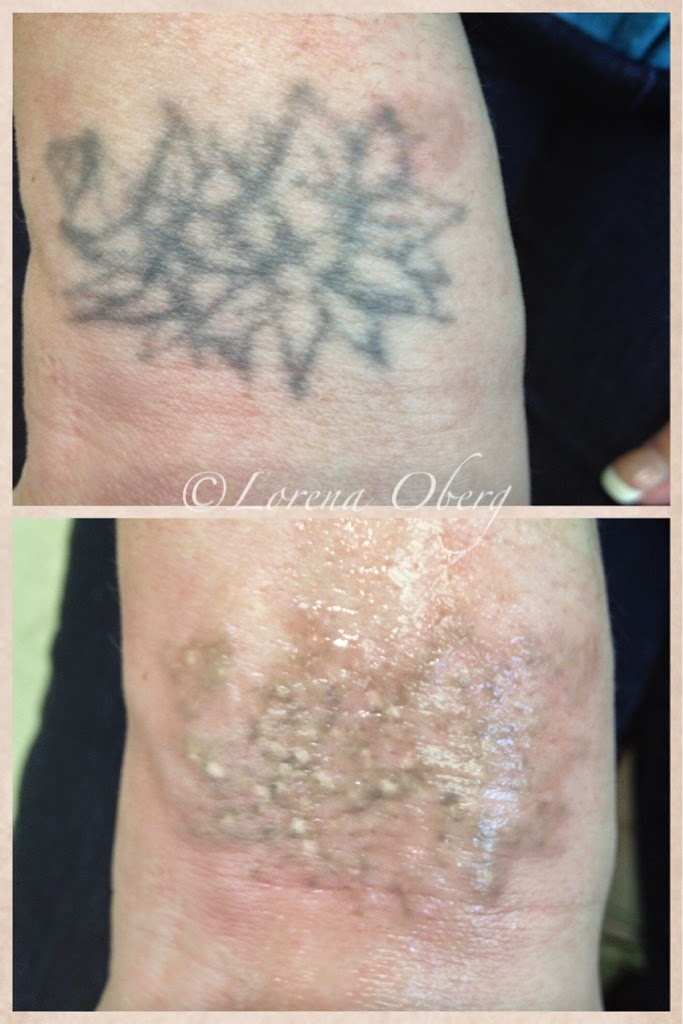
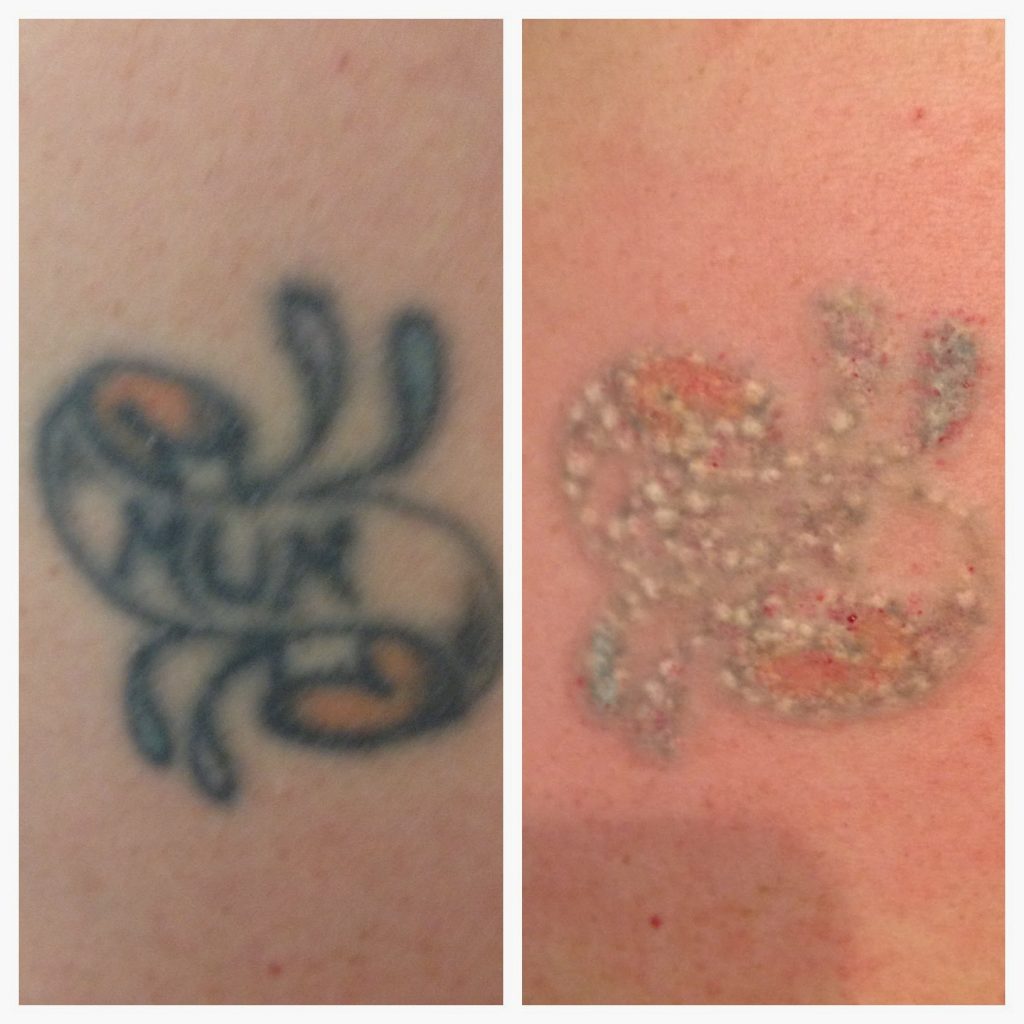
Using advanced Q-Switched laser technology, we direct targeted light energy into the skin. This selectively shatters the trapped ink pigments into microscopic particles without breaking or burning the outer surface of your skin. Over the following weeks, your body’s natural lymphatic system absorbs and flushes the shattered ink away safely.
We Offer:
Medical-Grade Laser Tattoo Removal: Best for deep, dark, and traditional body ink.
Saline & Glycolic Non-Laser Removal: Ideal for cosmetic permanent makeup or stubborn light colors that traditional lasers cannot see.
Tattoo Fading for Cover-Ups: If you love body art but want to replace an old piece, we can lighten your existing ink in just a few sessions so your cover-up artist has a clean canvas.
Frequently Asked Questions (Hurghada Market FAQ)
Is it safe to get laser tattoo removal in Hurghada’s sunny climate?
Yes, but strict protocols must be followed. You must protect the treated area from direct sun exposure and tanning beds during the healing process. We will advise you on the exact clinical aftercare steps to prevent hyperpigmentation in the Egyptian climate.
How many treatments will it take to remove my tattoo?
On average, body tattoos require between 8 to 12 sessions spaced strictly 6 to 8 weeks apart. Spacing sessions out gives your body time to safely flush out the ink fragments and lets the skin fully recover. Factors like ink depth, age, and location determine the exact timeline.
Is laser tattoo removal painful?
It can feel comparable to a rubber band snapping sharply against the skin. While there is discomfort, the treatment itself is incredibly fast. We use immediate post-treatment cooling techniques to soothe the skin instantly.
Can you treat all ink colors?
Dark blue, black, and red inks respond exceptionally well to our lasers. Light greens, oranges, and vibrant yellows are more stubborn and can require additional custom settings or non-laser treatments, which we will evaluate during your private consultation.
At Lorena Oberg’s we count with 15+ years of experience which has led Lorena to be one of the most sought out trainers in this field. Her expertise lies in removing the ink with minimal trauma and scarring.
It is important to understand that tattoos vary greatly. Older ink is usually easier to remove, colours can be more challenging. Only an expert that is experienced in both lasers and non laser techniques is advise on all the options that are available to you.
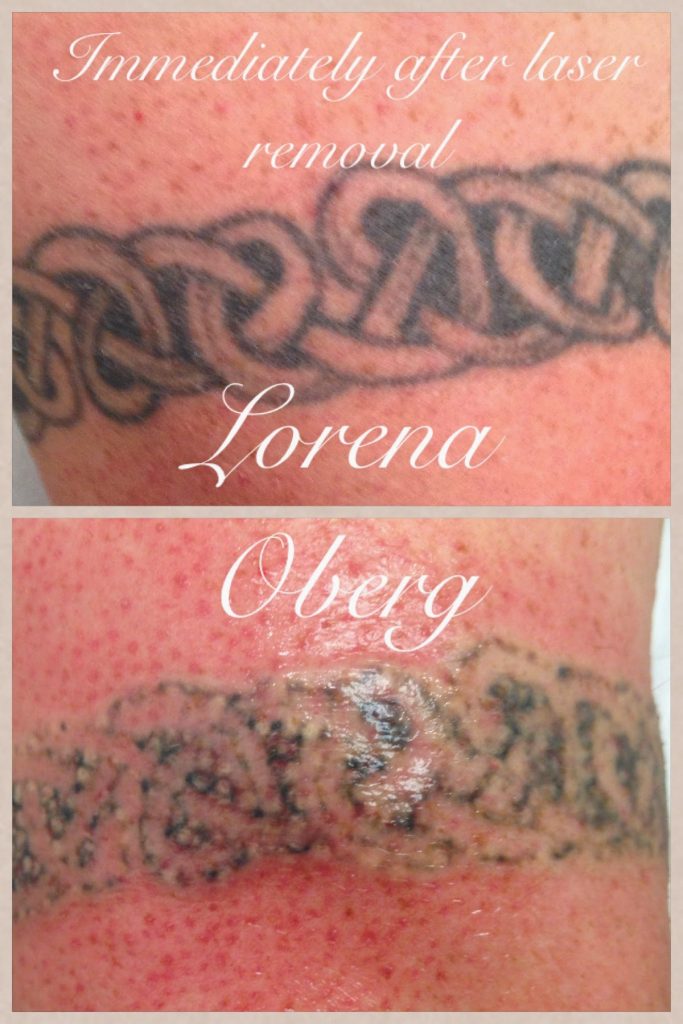
Yes it is (sorry). Comparable to a rubber band flicking against the skin. Laser tattoo removal is a controlled burn and we need to treat it as such. Post-treatment comfort with cooling spray and aloe vera gel (make sure you’re not allergic before coming for treatment). Surprisingly, because most of the damage is happening underneath the skin, the healing is not only fast but the pain is more of a discomfort than actual pain. 6-12 weeks needed for proper skin recovery between sessions.
Not all tattoos are the same. We can advise you as to what method is best for you with minimal scarring. Our consultations are done by Lorena herself, who not only knows how to remove the ink, but will also take care of your skin. We aim to remove the ink with minimal skin damage.
6-10 treatments typically sufficient, based on ink colour, depth, and tattoo characteristics. Older tattoos come out faster. This is due to 2 factors. The older the tattoo the less the ink density still in the skin. Another factor is newer pigments have more complex formulations that makes them more stable in the skin.
No. New tattoos have high ink concentrations and most are done with more stable inks. Tattoos less than 5 years old are more of a challenge. We discuss this in the consultation.
Most tattoos can be removed, but complete removal isn’t guaranteed. Some tattoos are easier to remove than others. Lorena will go over this in great detail during your consultation.
On average, tattoos require 8 – 12 sessions, with the session being 6 – 8 weeks apart. The amount of time required for the removal of a tattoo and the success of the removal varies with each individual. Factors influencing this include: skin type, location, colour, amount of ink, scarring or tissue change, and layering.
The laser breaks down the ink particles in the tattoo. The broken down ink is then absorbed by the body and carried out through the body’s lymphatic system.
Dark (blue, black) and red inks will resolve the best. Oranges, purples and yellows usually fade as well. Green inks are the most difficult to remove, and additional treatments are needed to produce significant fading.
Treating more frequently than 6 – 8 weeks increases the risk of adverse affects such as hypopigmentation scars and does not necessarily increase the rate of absorption. At each session, some but not all of the tattoo pigment particles are effectively fragmented, and the body removes the smallest fragments over the course of several weeks. The result is that the tattoo is lightened over time. Remaining large particles of tattoo pigment are then targeted at subsequent treatment sessions, causing further lightening. The number of sessions and spacing between treatments depends on various factors, including the area of the body treated and skin colour. Tattoos located on the extremities, such as the ankle, generally take longest. As tattoos fade, we may recommend that clients wait many months between treatments to facilitate ink resolution and minimise unwanted side effects. If you treat your tattoo too frequently, the laser is simply targeting the ink that it has already been fragmented but that your body hasn’t had enough time to remove completely.
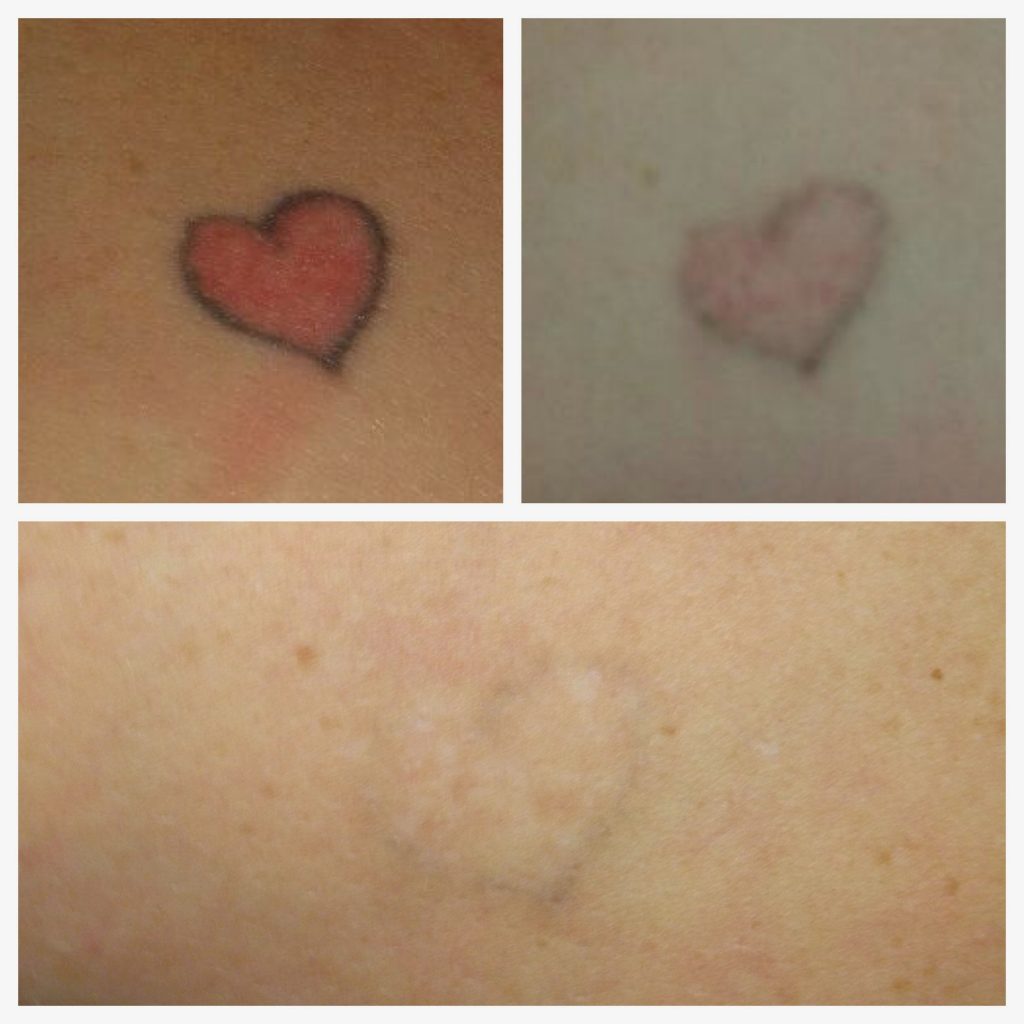
Everyone responds at a different rate. Most people will see a difference with every treatment over the 6 to 8 week period. Having a before photo available to look at helps when there is only a slight change.
In many cases, yes. Greater than 95% fading of the tattoo may be accomplished. However, it is important to know that there are many types of tattoo inks in use worldwide today. Not knowing which tattoo ink was used, or how deeply it was applied, makes it impossible for the technician to predict the degree of removal on any given tattoo.
NO. LASER stands for Light Amplification by the Stimulated Emission of Radiation. There are two basic types of radiation, (1) Non- ionizing radiation, and (2) Ionizing radiation. Hair removal lasers and tattoo removal lasers produce “non-ionizing” radiation which is simply the radiation of light. Ionizing radiation which represents x-rays, ultra-violet and nuclear radiation is a completely different type of radiation, and is not produced by hair and tattoo removal lasers.
What is the post-treatment care routine?
Directly after your session, a clinical healing gel is applied. You must keep the area clean, avoid picking any light scabs or blisters that form naturally, and wait at least 72 hours before swimming in pools or the sea.
Ready to Clear Your Skin?
Book a private consultation with our UK-trained clinical team. Let’s design the safest path to clear your ink completely.